
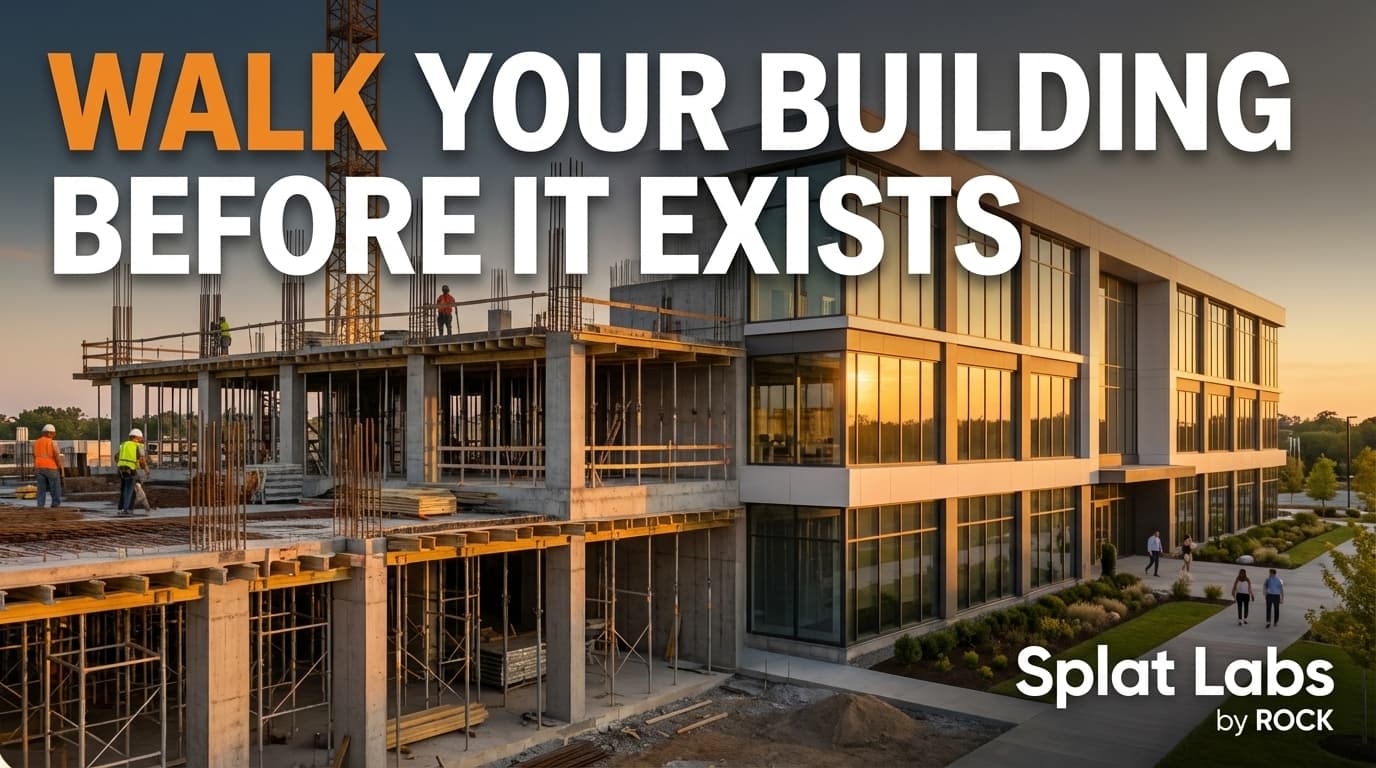
I was walking a construction site.
Just a concrete foundation. Part of the structure up. Nothing special yet.
We captured it as a Gaussian splat.
Then we did something new.
Inside Splat Labs, we used the AI image generator to stage a finished apartment building on the site. Took that image. Ran it through a 3D mesh tool. Got a GLB — an actual 3D object.
Then we dropped that GLB back into the real scene.
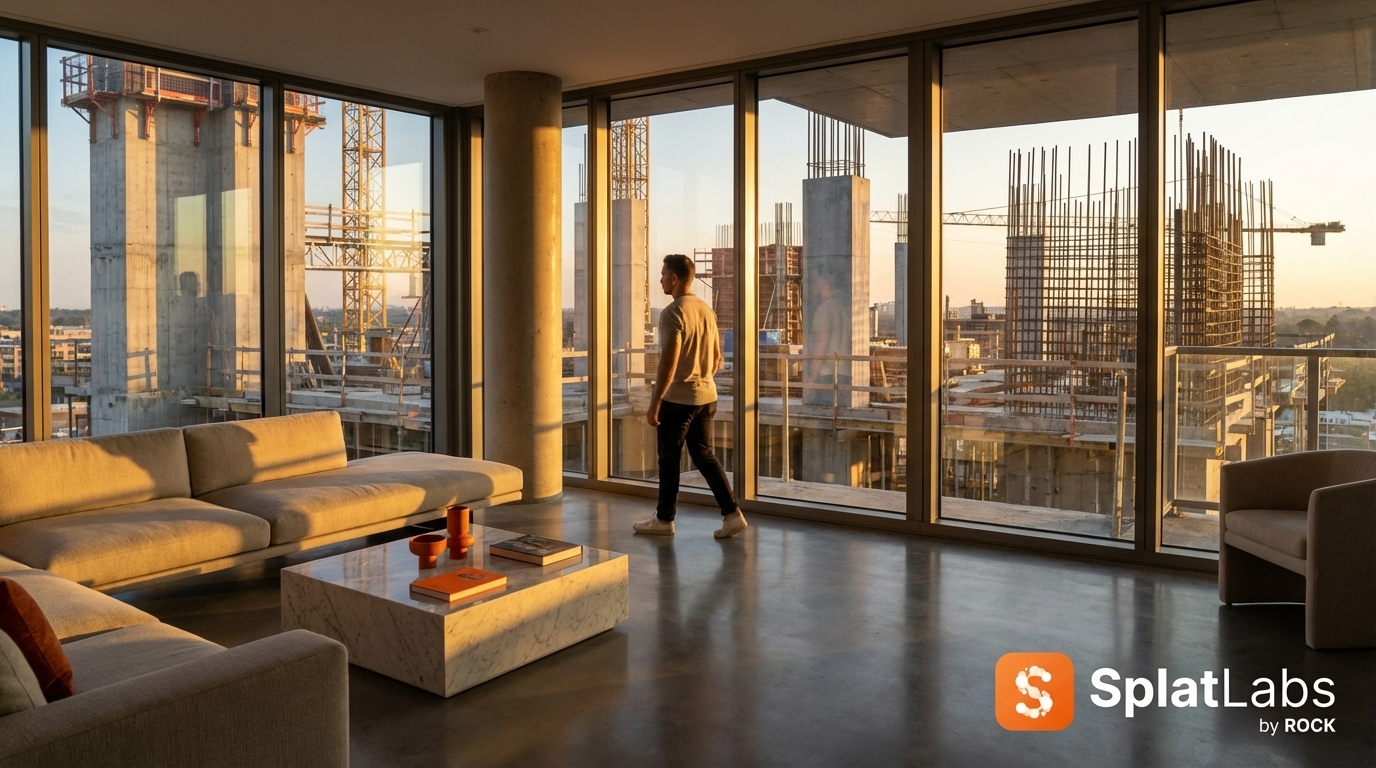
Now I can walk the finished building. Exactly where it's going to be built.
Not a render. Not a guess.
The real site — with the future building placed inside it.
What's Actually Happening
This is a new kind of workflow. Simple to describe:
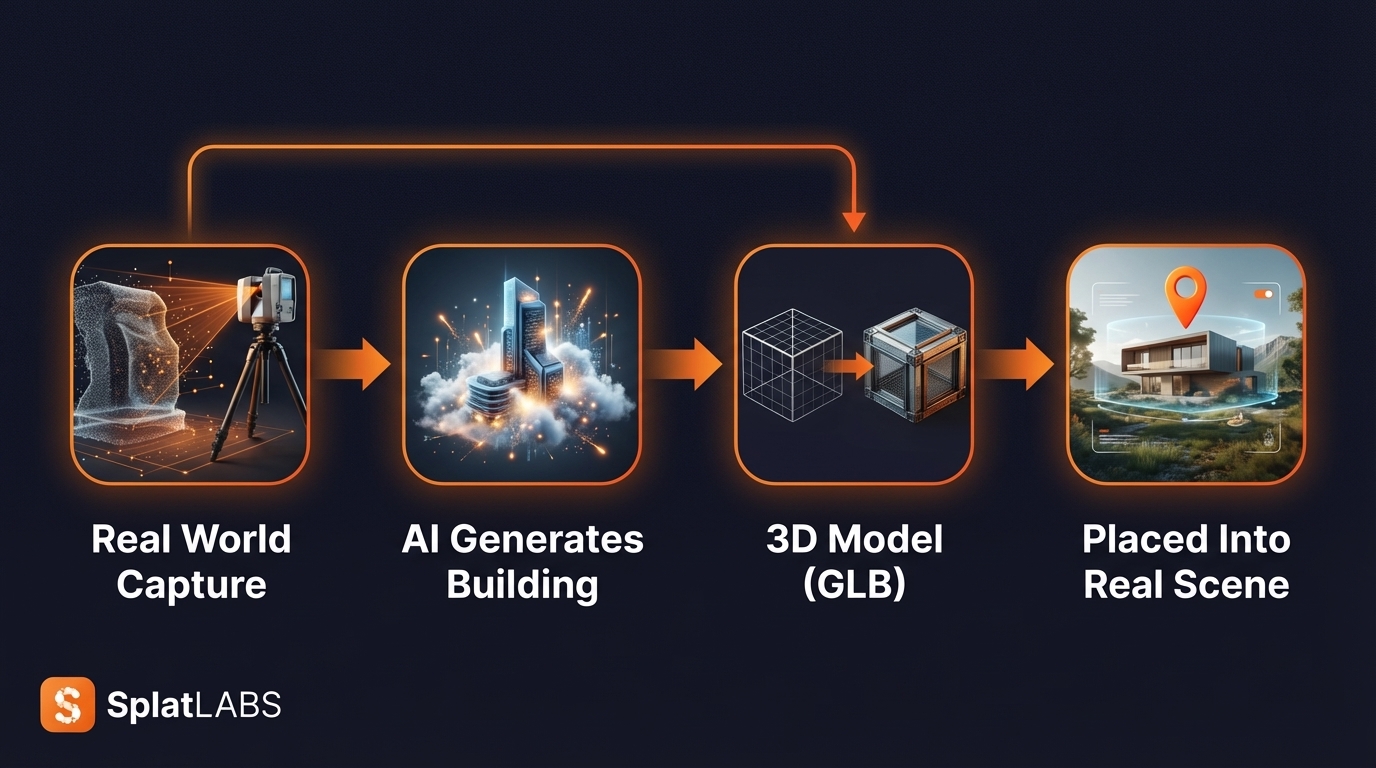
Reality → AI → 3D asset → back into reality
Here's how it works step by step:
-
Capture the real site — walk it with a PortalCam or any supported scanner and upload to Splat Labs. You get a photorealistic, navigable Gaussian splat of the construction site as it exists today.
-
Generate the finished building — use Splat Labs' built-in AI image generator to produce an image of what the completed structure will look like. Feed it the scene context. Get a realistic output.
-
Convert to a 3D model — take that AI-generated image through a 3D mesh tool (we used Meta's Segment Anything Model and a 3D generation pipeline) and export it as a GLB file.
-
Drop it back into the scene — import the GLB into Splat Labs using the 3D Objects feature. Translate, rotate, scale. Place the building exactly where the foundation sits.
-
Walk it — the building is now inside the real-world scene. Navigate around it, through it, and see it in context.
You're not imagining the future anymore. You're walking it.
Why This Matters
Construction still runs on 2D plans.
Stakeholders review static renderings. Buyers look at floor plans. Architects sketch on paper. And then everyone crosses their fingers that the translation from drawing to physical reality goes smoothly.
It often doesn't.
That disconnect — between what something looks like on paper and what it actually feels like in space — costs the industry billions every year. Expensive mistakes. Slow approvals. Buyers who sign contracts for units they can't truly visualize.
Teams are making million-dollar decisions without ever actually experiencing the result in the real world.
This workflow closes that gap.
The ROI Is Already There
Digital twin workflows aren't new. The data on their value is clear:
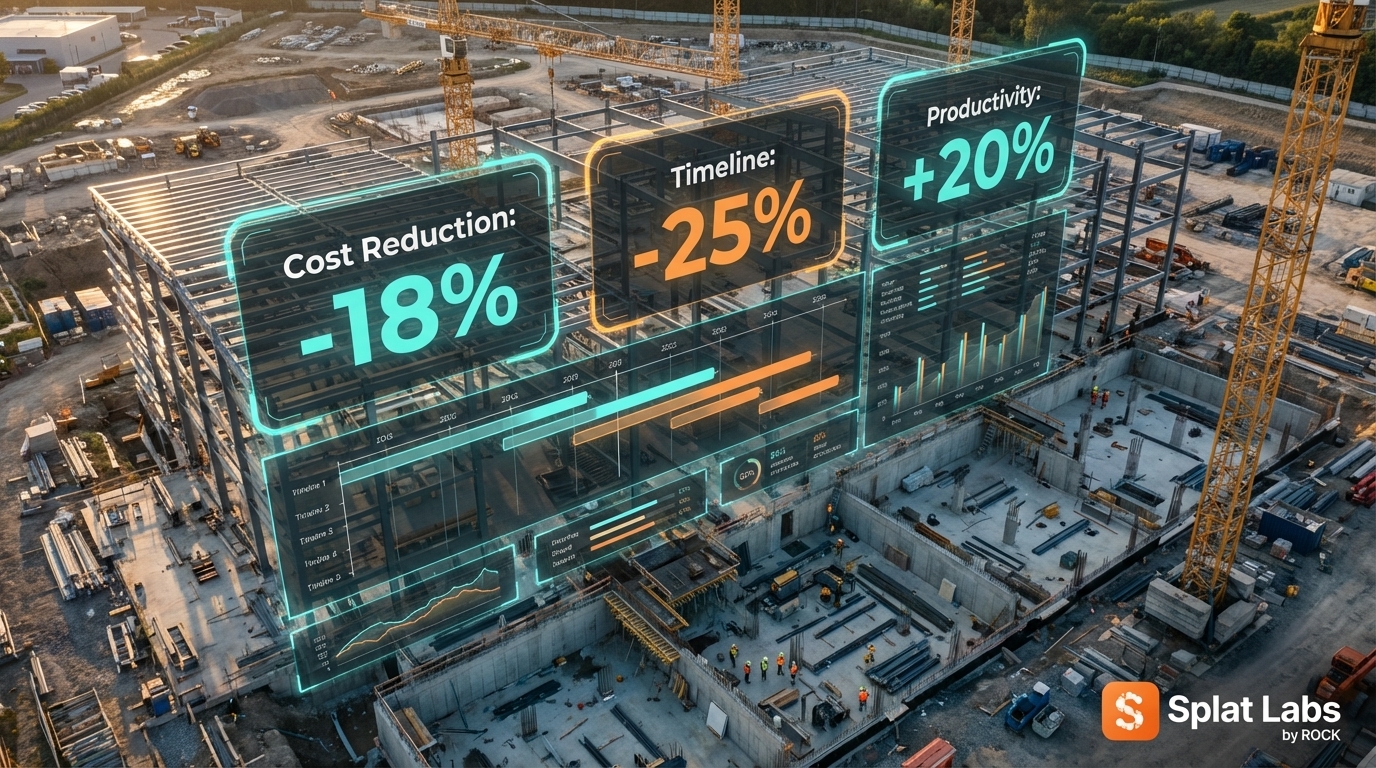
- ~10–20% reduction in project costs
- ~20–30% faster timelines
- 15–25% productivity improvements
But historically, creating a useful digital twin meant weeks of work, specialized software, and expensive consultants. The barrier was time and cost.
What changes here is speed.
You can now generate a future-state digital twin in minutes. Capture the site. Generate the building. Place it. Walk it. That's a morning's work — not a three-month modeling project.
Three Real Use Cases
1. Pre-Sales and Real Estate
Selling off-plan is hard. Buyers are asked to commit significant money to something that doesn't exist yet. The tools available — floor plans, CGI renders, scale models — all require imagination to bridge the gap between the image and the reality.
Now you can show them something different.
Instead of selling floor plans, buyers can stand on the actual site and walk the future apartment. See the real views from their future windows. Understand the scale of the space with their body, not just their brain.
That changes the sales conversation entirely.
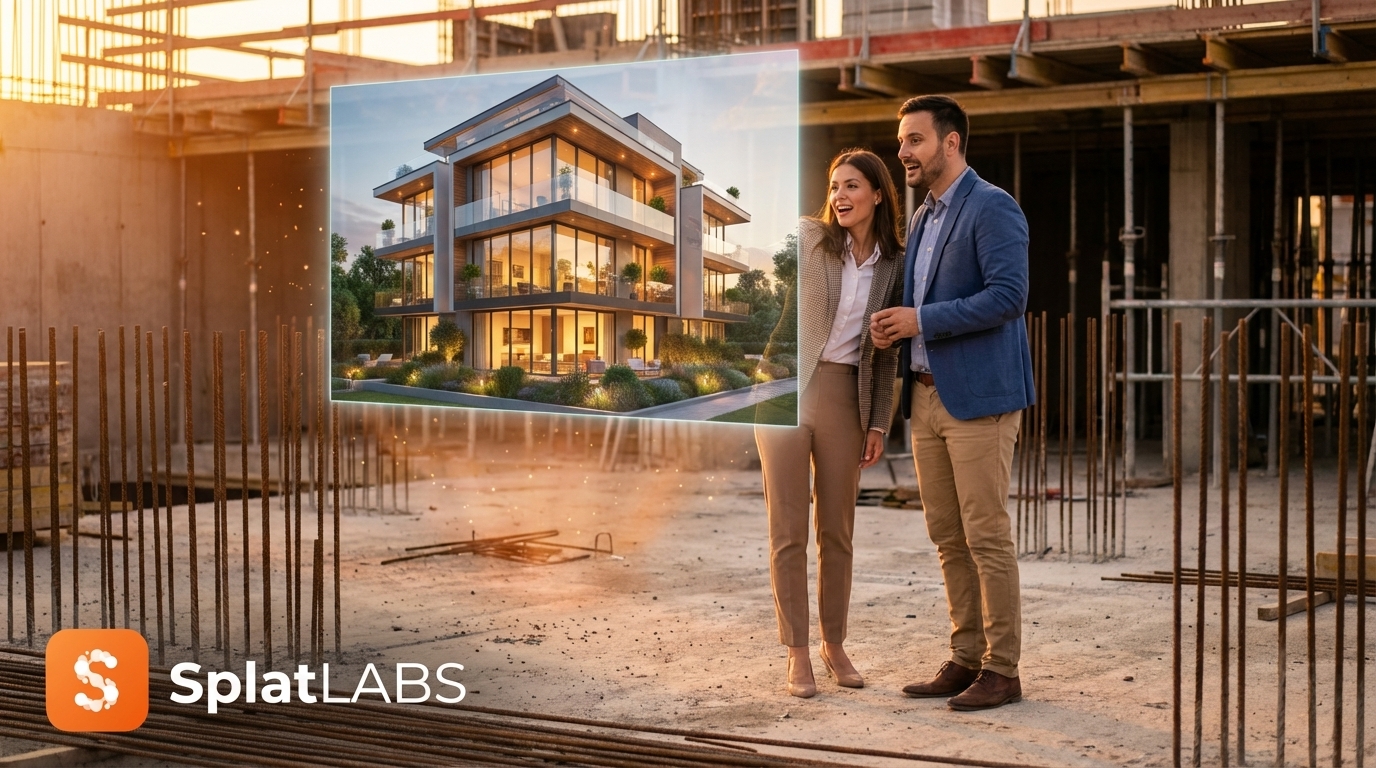
Shorter sales cycles. Higher buyer confidence. Pre-construction revenue that doesn't depend on a leap of faith.
2. Construction Validation
Most expensive mistakes happen at a specific moment: when something looks correct in CAD but fails in reality.
Scale is wrong. A sightline is blocked. A structural element doesn't fit the way the drawings suggested. By the time you discover it, you're already mid-build.
With this workflow, you can validate before construction is complete. Drop the model into the real scene. Check the placement. Confirm proportions against the actual site conditions — existing trees, neighboring buildings, the slope of the land.
One prevented mistake can save millions.
3. Faster Decision Making
Construction projects are slow partly because decisions are slow.
Long meetings. Presentations. Revision cycles. Back and forth between architects, developers, contractors, and clients — all working from different representations of the same thing.
This shortens that loop dramatically.
Walk the site. See the result. Decide immediately.
Weeks of coordination can collapse into a single site visit.
This Isn't Just Visualization
I want to be clear about what this is — and what it isn't.
This isn't a rendering tool. It's not visualization software. It's not a sales deck with better graphics.
It's the ability to simulate the future inside the real world.
You're no longer modeling reality. You're editing it. Testing outcomes. Making decisions faster, with more confidence, at less cost.
The Gaussian splat gives you the real world in full fidelity — every material, every sightline, every spatial relationship you can navigate. The AI-generated building gives you the future state. And the GLB import inside Splat Labs connects them.
Where This Goes Next
Right now, we're generating buildings from AI image outputs — good for early-stage visualization and pre-sales.
Next: importing actual architectural models. If your architect works in Revit or SketchUp, those models can be exported as GLB and dropped directly into the real-world scene. Test multiple design options in the actual site environment. Simulate an entire development with real geometry, not AI-generated approximations.
Anything that doesn't exist yet — a single building, a full development, a renovation — can now be experienced as if it does.
Try It on Your Next Project
If you're working on a construction project, a real estate development, or anything being built in the real world — ask yourself one question:
What would change if your team could walk the finished building today?
That's what we're building at Splat Labs. Capture. Generate. Place. Walk.
Start with a free account and upload your first splat. See what it feels like to stand in a future that hasn't been built yet.