
The Olympic Games are the most documented sporting event in human history. At Milano Cortina 2026, thousands of cameras, AI tagging systems, FPV drones, and broadcast rigs generated petabytes of footage across every competition venue. Every jump, sprint, and finish line captured from every conceivable angle.
And yet, almost none of it captures what it actually feels like to be there.
There is a gap in the Olympic archive that has existed since the beginning: the physical spaces. The cultural exhibitions, the hospitality environments, the rooms where the history of the Games comes alive for people lucky enough to attend — these spaces exist for a few weeks, and then they are gone. Photographs flatten them into rectangles. Video reduces them to a single path through a single lens. You can see what they looked like. You cannot walk through what they were.
At Milano Cortina 2026, one artist brought the tool to close that gap.
The Exhibition Almost No One Could See
Clubhouse 26 Milano was housed inside the Dazi — a historic building at Piazza Sempione first constructed in 1806, sitting beside the Arco della Pace and Parco Sempione. For the duration of the Winter Games, On Location (the IOC's official hospitality provider) transformed it into a premium venue in collaboration with the Olympic Museum in Lausanne.
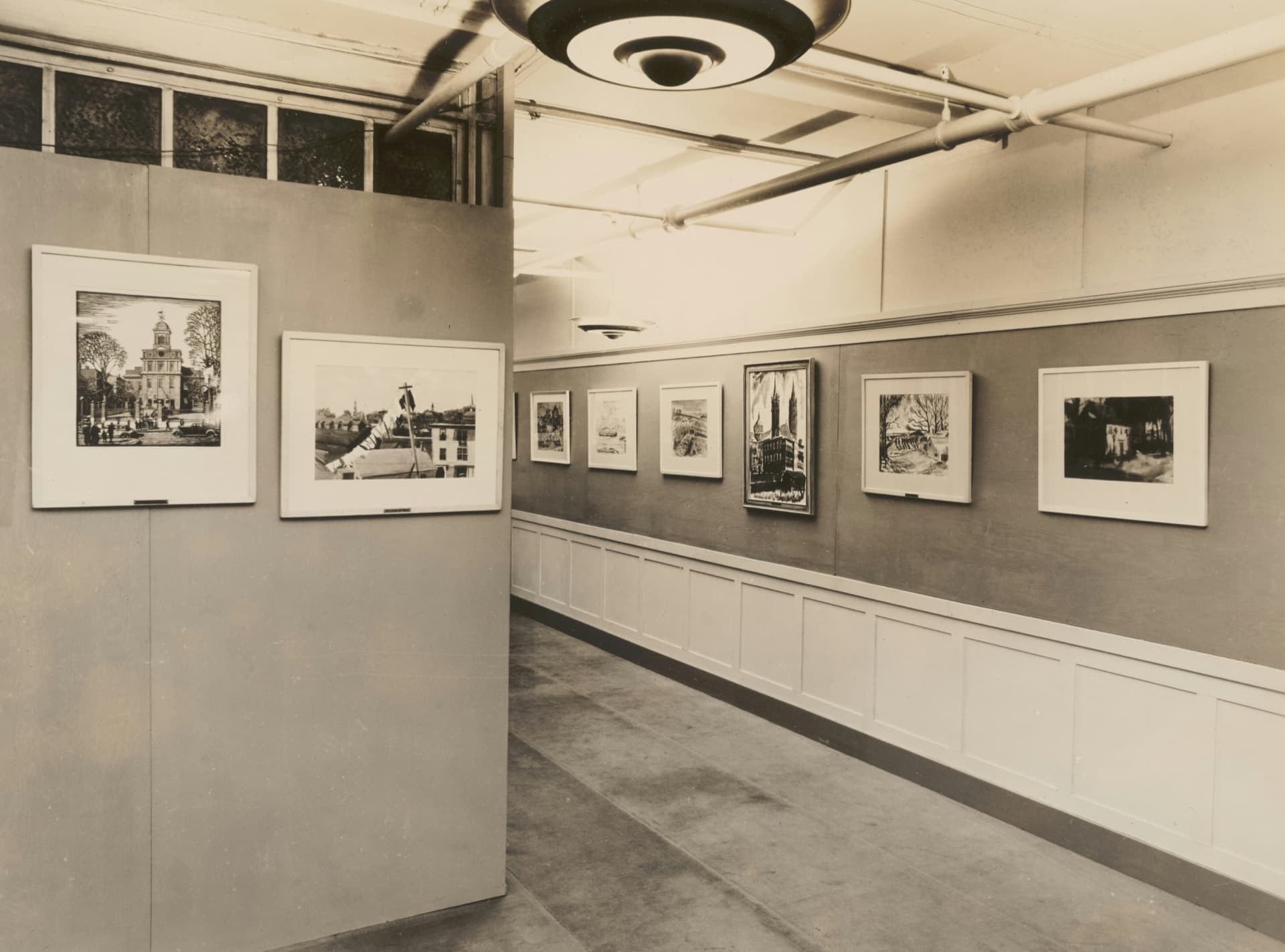
The space contained a complete set of Olympic medals and torches spanning over a century, exclusive posters chronicling the visual identity of the Games from decade to decade, and a mascot room that traced how each host nation chose to personify the Olympic spirit. The Olympic Museum loaned historical artifacts directly from Lausanne — a century of material culture assembled in a single room in Milan for sixteen days.
Hospitality packages started at €200 per person. Access required purchasing through official channels. For the vast majority of people who follow the Olympics worldwide — and even for most visitors to Milan during those weeks — Clubhouse 26 was completely out of reach.
The exhibition opened February 6, 2026. It closed February 22. The artifacts returned to Lausanne. The building went back to being a civic space. And almost no record existed of what was inside.
One Camera Changed That
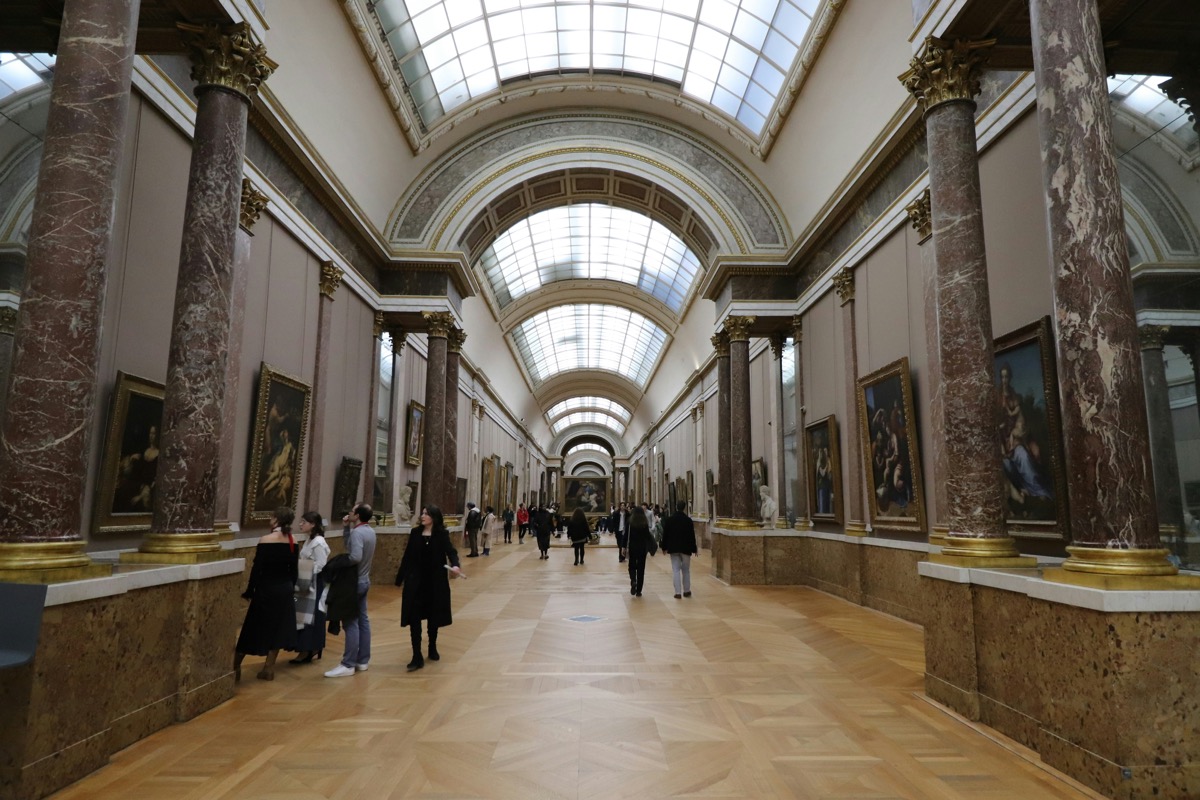
Josette Seitz, an XR developer and artist based in the San Francisco Bay Area, walked through Clubhouse 26 with an XGRIDS PortalCam. She captured the Olympic poster history, the medal collection spanning from 1924 to 2026, and the mascot room — all of it rendered as a navigable, photorealistic 3D environment that anyone with a web browser can now explore.
The PortalCam is the first spatial camera built specifically for 3D Gaussian Splatting. Its dual-fisheye lenses, onboard LiDAR, and Multi-SLAM chip work together to reconstruct a full three-dimensional understanding of any space you walk through. You do not need a tripod, a scanner, or hours of post-processing. You walk. The camera builds the scene.
The result is not a photograph of the Clubhouse 26 exhibition. It is the exhibition — navigable from any device, from anywhere in the world, without an account or an app or a download.
Explore the Clubhouse 26 Olympic Museum Gaussian Splat on Nucleus4D →
You can orbit around the medal cases and watch how light plays across a century of metalwork. You can read the poster designs up close. You can understand the spatial relationships the curators intended — how a 1924 medal sits beside a 2026 medal, what the deliberate sequencing of the posters communicates, how the mascot room was arranged. These are spatial stories that no photograph can tell.
For educators, for historians, for the billions of people who follow the Olympics and will never attend: the Clubhouse 26 exhibition now exists outside its physical constraints.
Why 3D Preservation Is Different
A photograph of an Olympic medal tells you what it looks like from one angle, under one lighting condition, at one moment. A video walkthrough gives you one path through a space, chosen by whoever held the camera.
Gaussian splatting is different at a structural level. It captures the full three-dimensional light field of a space — the geometry, the reflections, the spatial relationships between objects. The result is not a recording of what someone saw. It is a reconstruction of the space itself, explorable from any viewpoint.
That difference matters for preservation in ways that photographs and video do not address. The exhibition curators at Clubhouse 26 made deliberate choices: which medals to place beside each other, how to sequence the posters across the room, what the spatial experience of moving through a century of Olympic history should feel like. A Gaussian splat preserves those choices intact. You can study the exhibition the way a researcher would study it — walking through it, examining details, understanding the whole from every angle.
What This Means for Events, Venues, and Institutions
Clubhouse 26 is one example, but the pattern it represents is universal. Every major event — trade shows, product launches, corporate summits, museum exhibitions, hospitality environments, cultural festivals — creates physical spaces that exist for a limited time and then disappear. The investment required to design and build them is substantial. The documentation of them is almost always inadequate.
Gaussian splatting changes the economics of preservation. A single walk-through with a PortalCam produces a 3D asset that can be uploaded to Splat Labs Cloud, shared via a simple link, embedded on any website, and explored by anyone — with no app required, on any device.
For event producers: your venue becomes a permanent deliverable, not a memory. For cultural institutions: temporary exhibitions gain a permanent digital counterpart. For venue operators: prospective clients can walk through your space before setting foot in it. For brands: a hospitality environment built for a week can be experienced by audiences worldwide.
The PortalCam Standard starts at $4,999 and includes a free year of Splat Labs Cloud. The entire workflow — capture, process, host, share — is available to any organization willing to point a camera at the spaces they create.
The most documented sporting event in human history left one of its most significant cultural exhibitions almost entirely undocumented. One artist with one camera fixed that in an afternoon.
Every ephemeral space deserves that possibility.