
![TOKYO [UN]REAL ESTATE: How 3D Scanning Is Archiving the Soul of Tokyo Living Spaces](/_next/image?url=https%3A%2F%2Fpublic.rockrobotic.com%2Fsplatlabs%2Fblog%2Ftokyo-unreal-estate%2Fcover-kv-room-gray.jpg&w=3840&q=75)
A New Kind of Real Estate Agency
What if a real estate listing did not just show you photos of a room — but let you walk through it, explore every corner, and feel the texture of someone's actual life?
That is the premise behind TOKYO [UN]REAL ESTATE, a groundbreaking project by speculative design studio MVMNT that transforms real Tokyo living spaces into fully navigable, photorealistic 3D worlds using Gaussian Splatting technology.
Developed as part of the CCBT Art Incubation Program at Civic Creative Base Tokyo in Shibuya, the project debuted with a public exhibition from February 28 to March 9, 2025 — and it represents one of the most creative applications of 3D spatial capture we have ever seen.
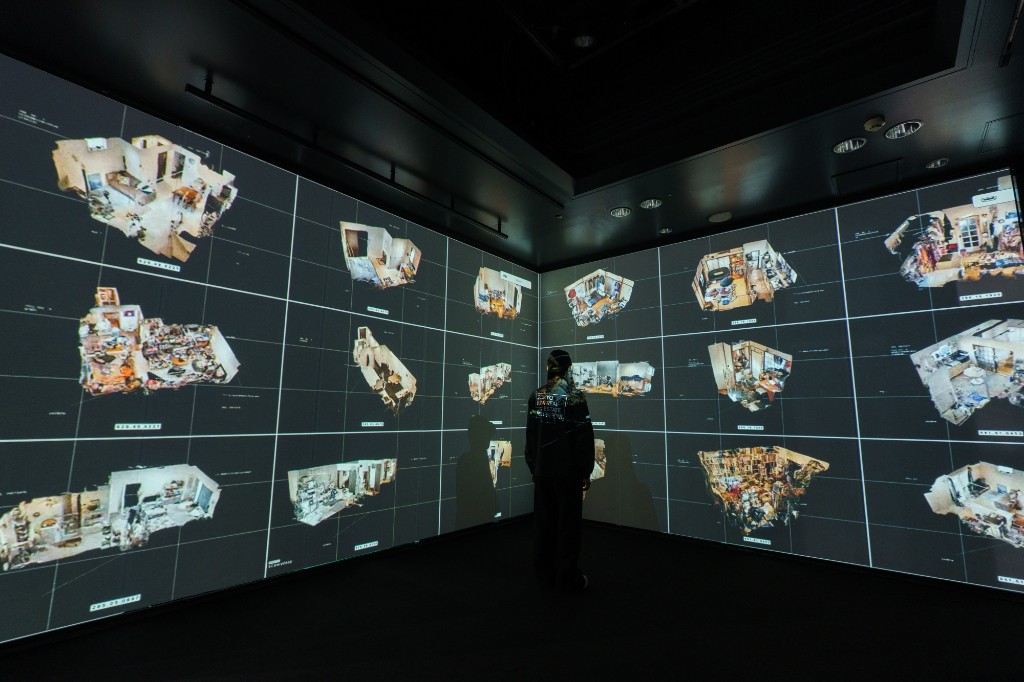 A visitor explores dozens of 3D-scanned Tokyo apartments projected on immersive screens at CCBT, Shibuya
What Is TOKYO [UN]REAL ESTATE?
MVMNT describes itself as a speculative design unit dedicated to "creating the legends of the year 20XX." For this project, they turned their lens on something deeply personal yet universal: the spaces where people actually live.
The team collected 3D scan data from dozens of real Tokyo apartments and living spaces, creating a digital archive of diverse lifestyles across the city. Each scan captures not just the geometry of a room, but the personality of its inhabitant — the clutter on a desk, the books on a shelf, the way light falls through a window.
The project draws inspiration from modernology (kougengaku), a form of urban sociology that emerged in prewar Japan. Where early modernologists documented city life through sketches and field notes, MVMNT documents it through photorealistic 3D Gaussian Splats — a 21st-century evolution of the same impulse to understand how people inhabit cities.
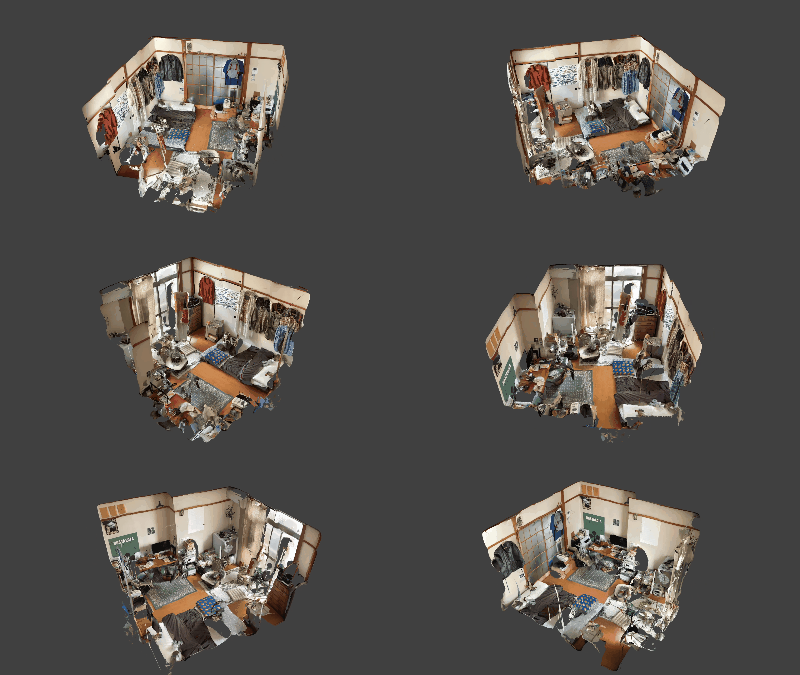 A 3D-scanned Tokyo living space — every object, every detail preserved as a walkable Gaussian Splat
From Physical Rooms to Digital Worlds
The scanning process is straightforward but the results are extraordinary. MVMNT's team visited real Tokyo residents, scanned their living spaces, and processed the captures into Gaussian Splats — the same photorealistic 3D format that professionals in real estate, construction, and architecture use every day on Splat Labs Cloud.
What makes Gaussian Splatting so powerful for this kind of project is the fidelity. Unlike traditional 3D modeling or photogrammetry, a Gaussian Splat preserves the photorealistic quality of a scene — light, texture, color, and depth — in a format that anyone can explore in a web browser. No app required. No VR headset needed.
The result: 32 properties scanned and displayed, each one a window into a real person's life in Tokyo.
Explore a 3D Scan: FabCafe Tokyo
One of the spaces captured during the project was FabCafe Tokyo — a legendary creative hub on Dogenzaka street in Shibuya where digital fabrication meets specialty coffee. The cafe is home to laser cutters, 3D printers, and a rotating cast of exhibitions and maker events.
Below is the actual Gaussian Splat scan of FabCafe Tokyo, hosted on Splat Labs Cloud. Click and drag to orbit, scroll to zoom, and explore the space as if you were standing inside it.
Try it yourself: Click and drag to look around. Scroll to zoom in and out. On mobile, use two fingers to navigate. This is a live, interactive 3D scene — not a video.
The Exhibition at CCBT Shibuya
The TOKYO [UN]REAL ESTATE exhibition ran at Civic Creative Base Tokyo (CCBT) in the Shibuya Tobu Hotel building. CCBT is a public creative hub operated by the Tokyo Metropolitan Government, focused on exploring the intersection of art and digital technology.
The exhibition presented the project on multiple levels:
- 3D Room Viewers — visitors could walk through scanned apartments on interactive displays, exploring real Tokyoites' living spaces in photorealistic detail
- 32 Property Wall — a gallery-style display showcasing all scanned properties, presented like an imaginary real estate agency
- Creative Works — manga, games, extended reality experiences, and animations created using the 3D scan data as open-source creative assets
- Takeable Flyers — property-style brochures for each scanned space that visitors could bring home
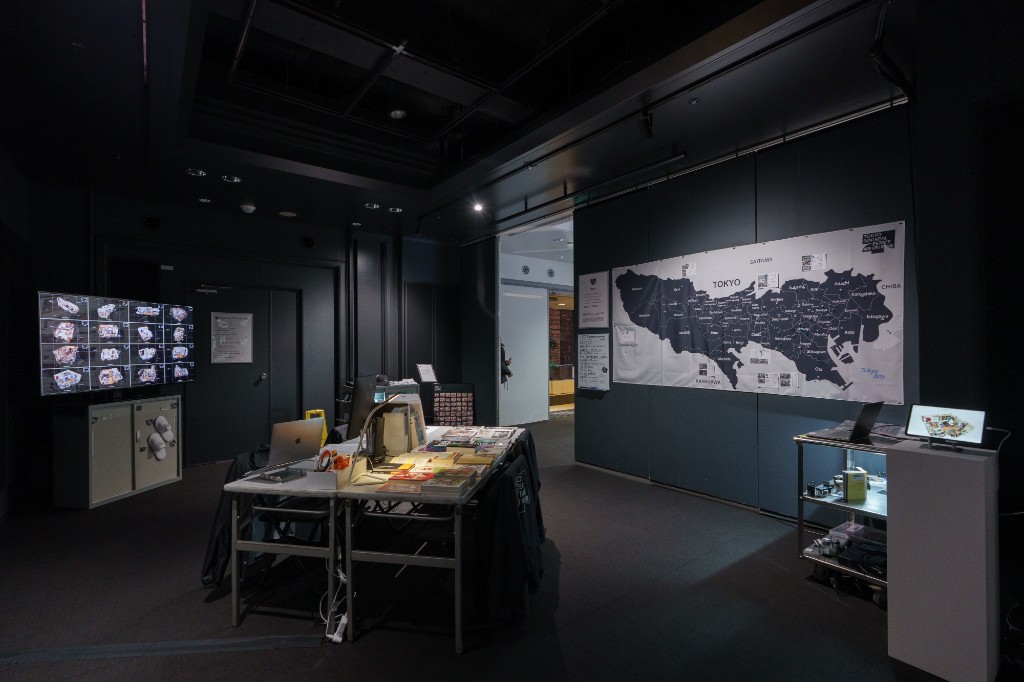 Inside the TOKYO [UN]REAL ESTATE exhibition — a Tokyo map pinpoints every scanned property, with creative works and materials on display
MVMNT also released the 3D scan data on a dedicated website, making the scans available as open-source creative assets — inviting artists, developers, and designers to build new works on top of real spatial data from Tokyo.
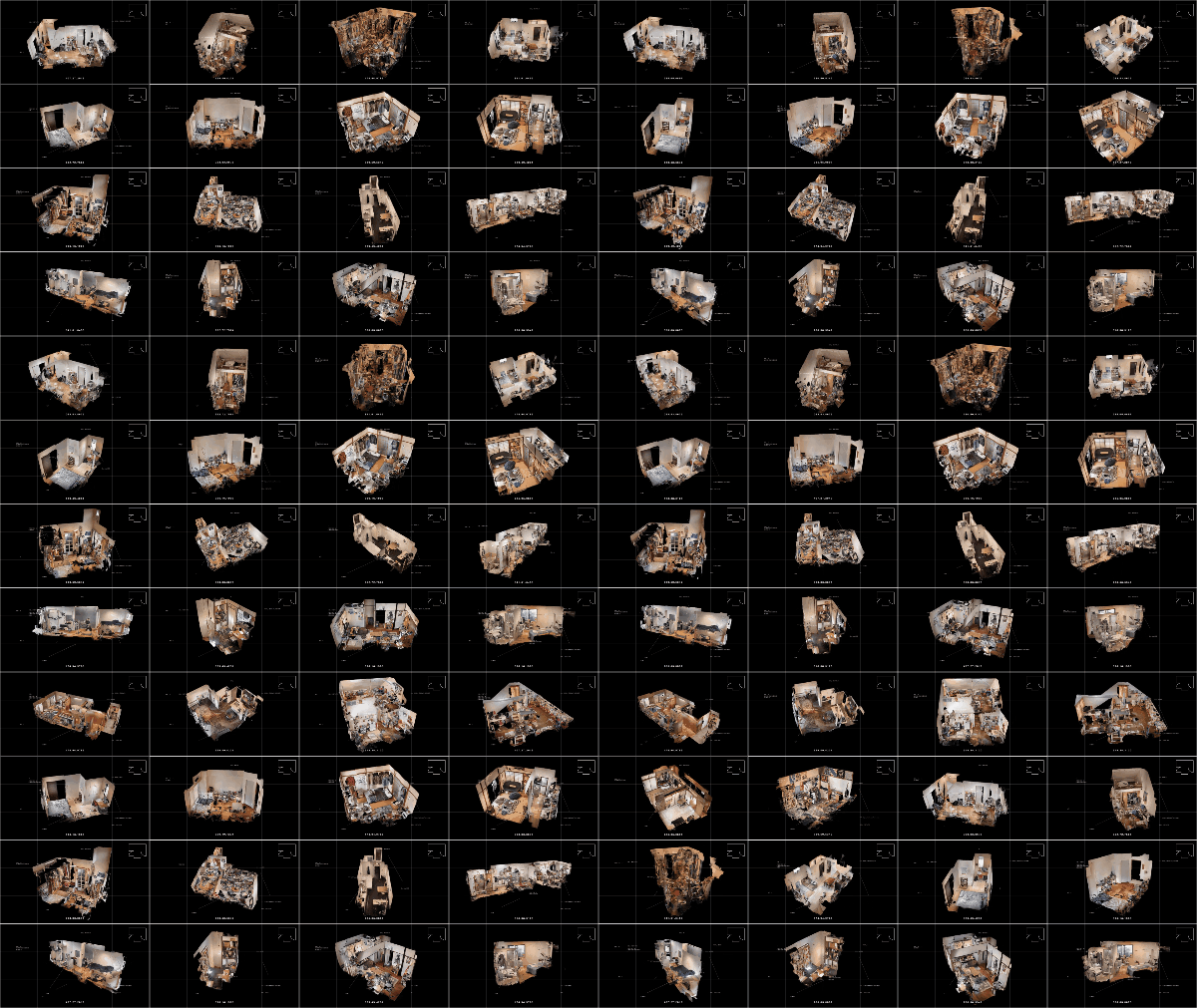 The Room Catalog — browsing scanned Tokyo apartments like a next-generation real estate listing
Why This Matters for 3D Spatial Capture
TOKYO [UN]REAL ESTATE is more than an art exhibition. It is a proof of concept for how Gaussian Splatting is becoming the default format for documenting real spaces — not just in professional industries, but in culture, art, and public archiving.
Consider the applications:
| Use Case | Traditional Approach | With Gaussian Splatting |
|---|---|---|
| Real estate listing | Flat photos, maybe a 360 tour | Walkable, photorealistic 3D scene |
| Cultural documentation | Photos and written descriptions | Navigable digital twin anyone can explore |
| Interior design | Floor plans and mood boards | Full 3D context with AI virtual staging |
| Urban research | Field notes and surveys | Life-sized spatial archives preserved digitally |
MVMNT's project proves that Gaussian Splats are not limited to commercial real estate or construction. They are a universal tool for preserving and sharing physical spaces — from a student's 6-tatami apartment in Shimokitazawa to a creative maker space in Shibuya.
How to Create Your Own Spatial Archive
Inspired by MVMNT's approach? You can create your own 3D spatial archives with Splat Labs:
- Capture your space using PortalCam, a smartphone app like Kiri Engine, or any Gaussian Splat capture tool
- Upload to Splat Labs Cloud at cloud.splatlabs.ai — processing takes just minutes
- Share or embed your 3D scene on any website, in a Notion page, or via a direct link — no app required for viewers
- Enhance with AI — generate floor plans, virtually stage empty rooms, or create fly-through movies
Whether you are documenting a property for sale, preserving a cultural space, or archiving a moment in time, Splat Labs gives you the tools to turn any physical space into a navigable digital world.
Splat Labs supports Gaussian Splats from any source — PortalCam, Lixel L2 Pro, Postshot, XGRIDS, Kiri Engine, Luma AI, and more. Upload in PLY, SPLAT, KSPLAT, or XGRIDS format and start sharing immediately.
Explore More
- How to Embed a 3D Gaussian Splat Viewer on Your Website — step-by-step embedding guide
- Getting Started with Gaussian Splatting — everything you need to know
- MVMNT Project Website — learn more about the TOKYO [UN]REAL ESTATE project
- CCBT Exhibition Page — official exhibition details
Have a creative project using Gaussian Splatting? We would love to feature it. Contact our team to share your story.